Love as a physical passage.
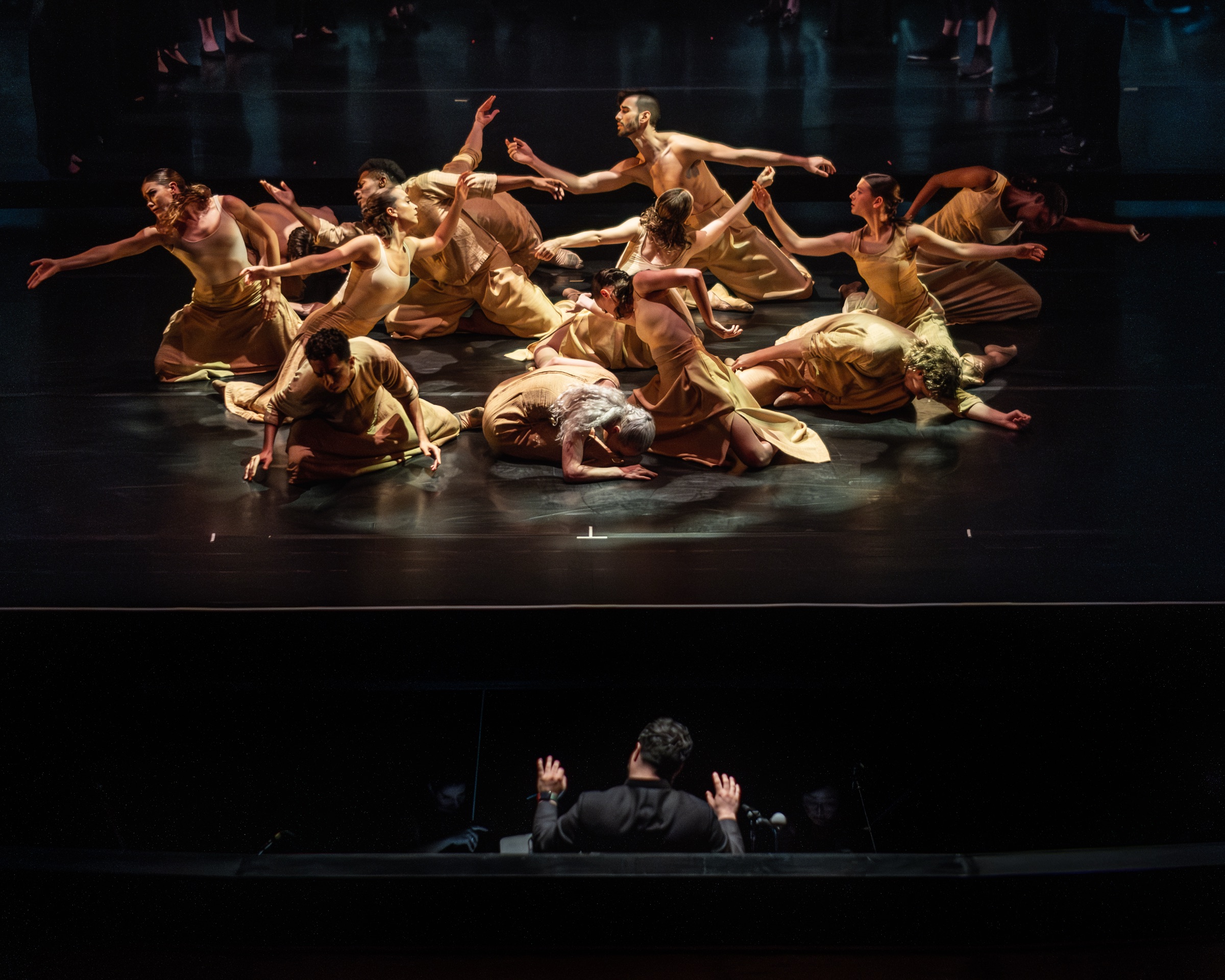
Bruce Wood Dance brings Rumi's inner transformation into the body, turning attraction, longing, surrender, and unity into visible motion.
A 55-minute cultural experience about Rumi and Shams Tabrizi, built through music, dance, Farsi poetry, projection, and collaborative AI art.
How do we create a space of transformation? SHAMS follows poet Rumi through the Sufi mystic seven stages of love - attraction, infatuation, longing, love, annihilation, subsistence, and unity - after his encounter with Shams Tabrizi. The piece turns that spiritual architecture into a room: singers, dancers, projections, scrim, and audience moving through the same emotional passage.
In Dallas, the story expands beyond two historical figures. It becomes a civic ritual for a city with one of the country's most significant Middle Eastern and North African communities, asking how Persian poetry, contemporary movement, AI-assisted art, and live voice can create belonging, empathy, and transformation in the room.
Bruce Wood Dance brings Rumi's inner transformation into the body, turning attraction, longing, surrender, and unity into visible motion.
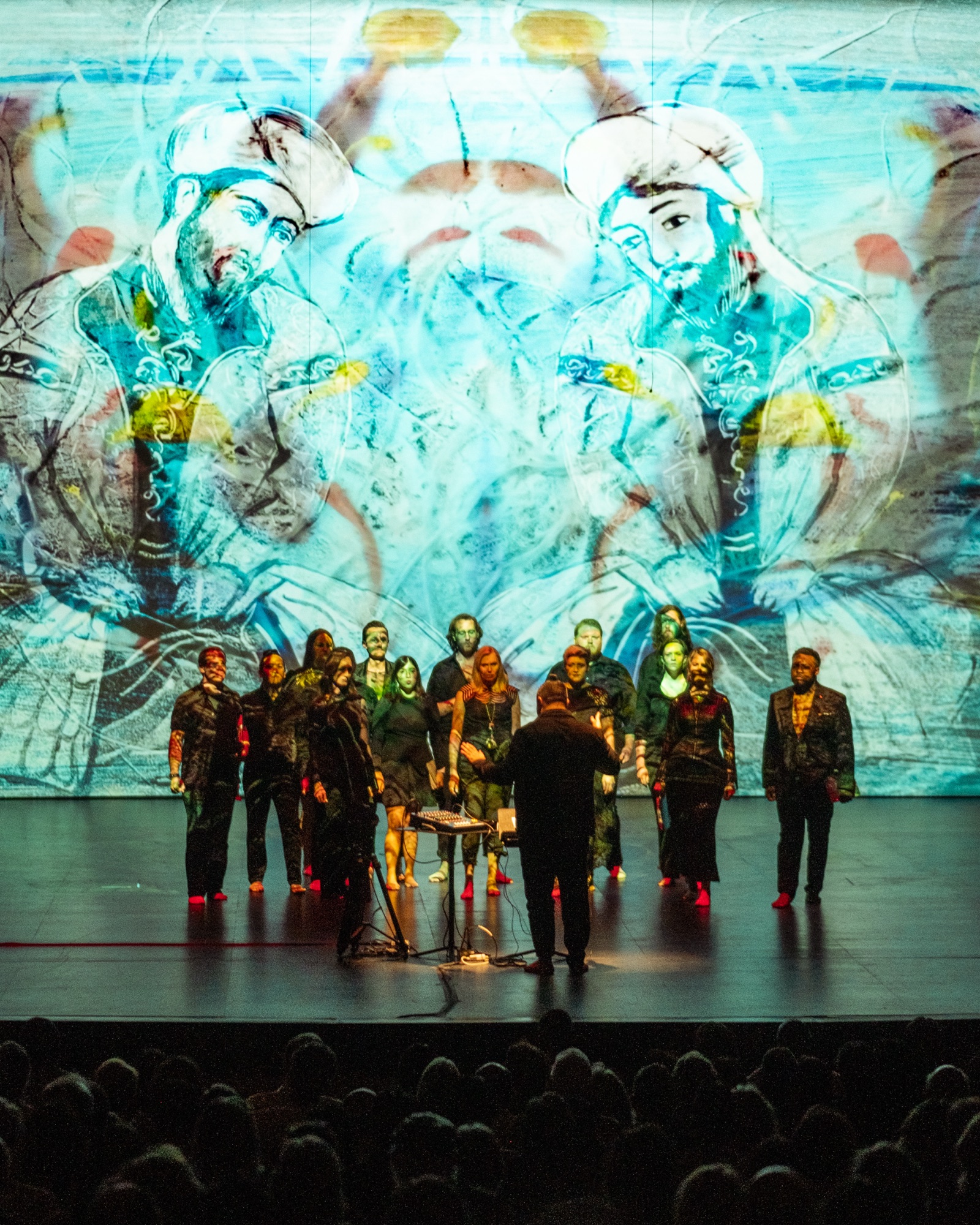
Sahba Aminikia's score uses 16 voices, narrator, string quartet, and pre-recorded sound to carry Rumi's poetry in its original Farsi.
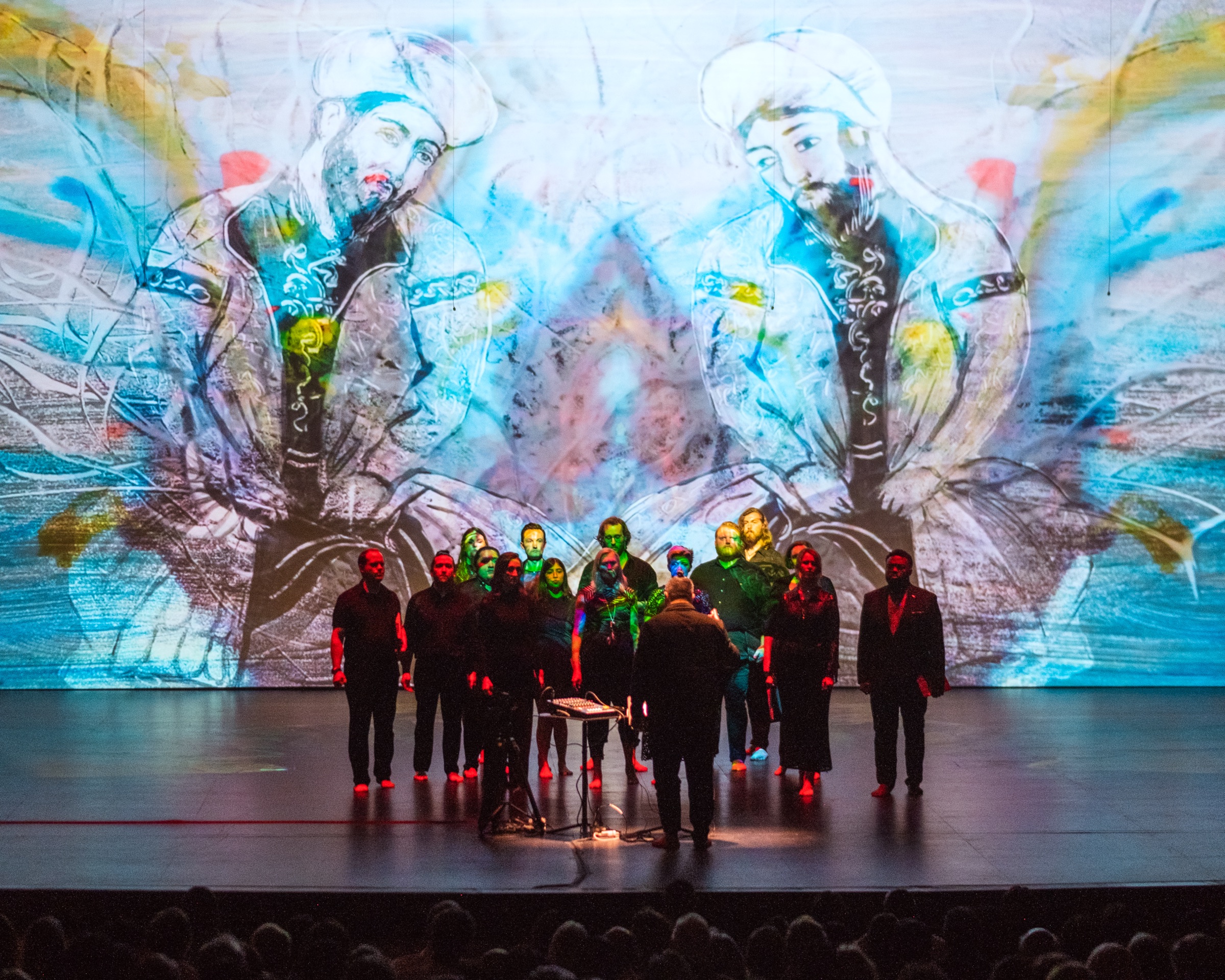
Baumann created the visual art for SHAMS; animating that artwork with AI became one of the clearest ways technology entered the production, extending the emotional terrain of each stage without replacing the hand of the artist.
SHAMS is structured as a multidisciplinary passage through attraction, infatuation, longing, love, annihilation, subsistence, and unity. The score, movement, and projected imagery are not separate layers of spectacle; they are a single system designed to put the audience inside Rumi's transformation.
The projection system uses a scrim between image and performer, allowing Sara Baumann's artwork to land directly on the singers. As the projected lines move, they trace the choir in real time, making the performers part of the image field rather than bodies standing in front of a screen.
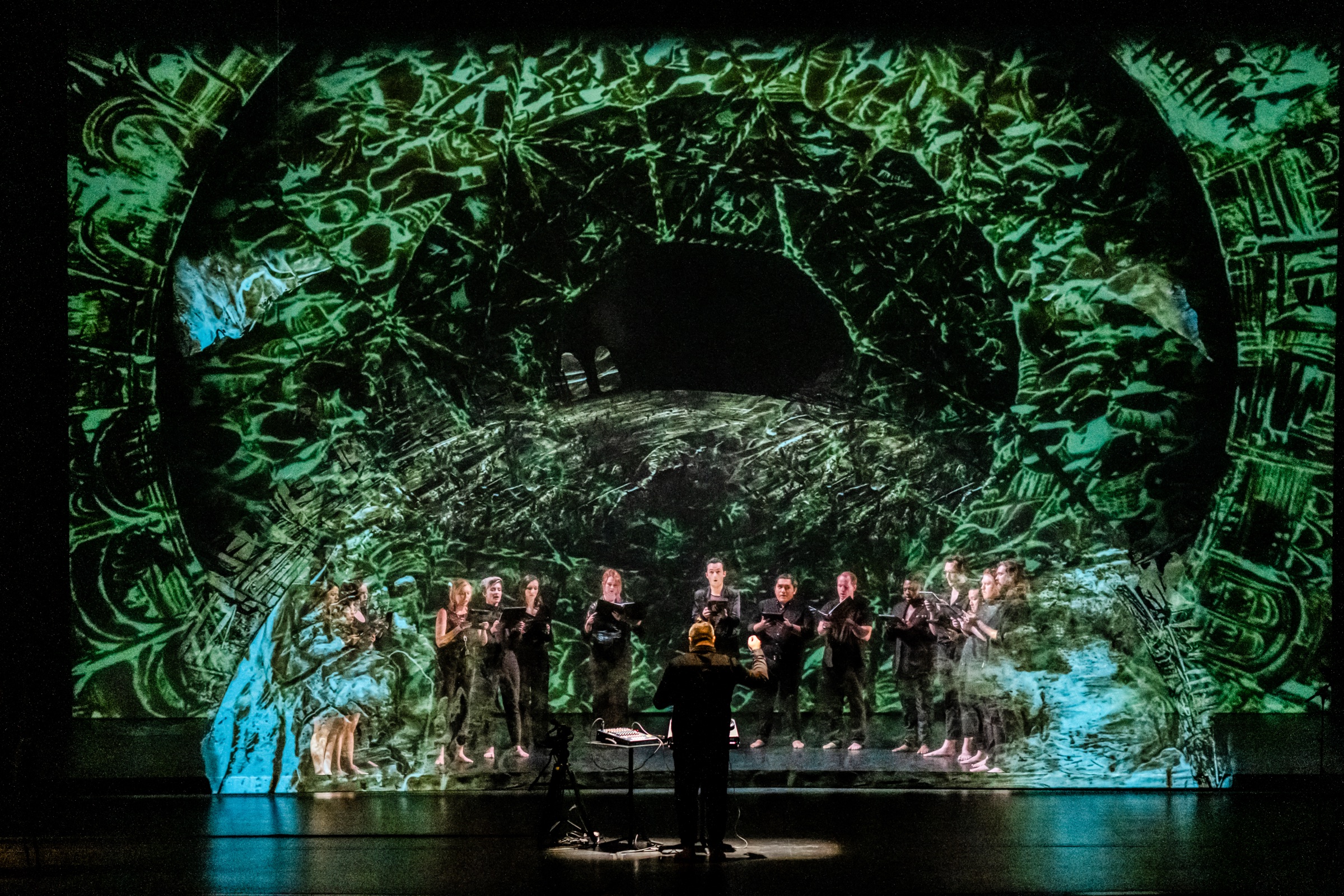
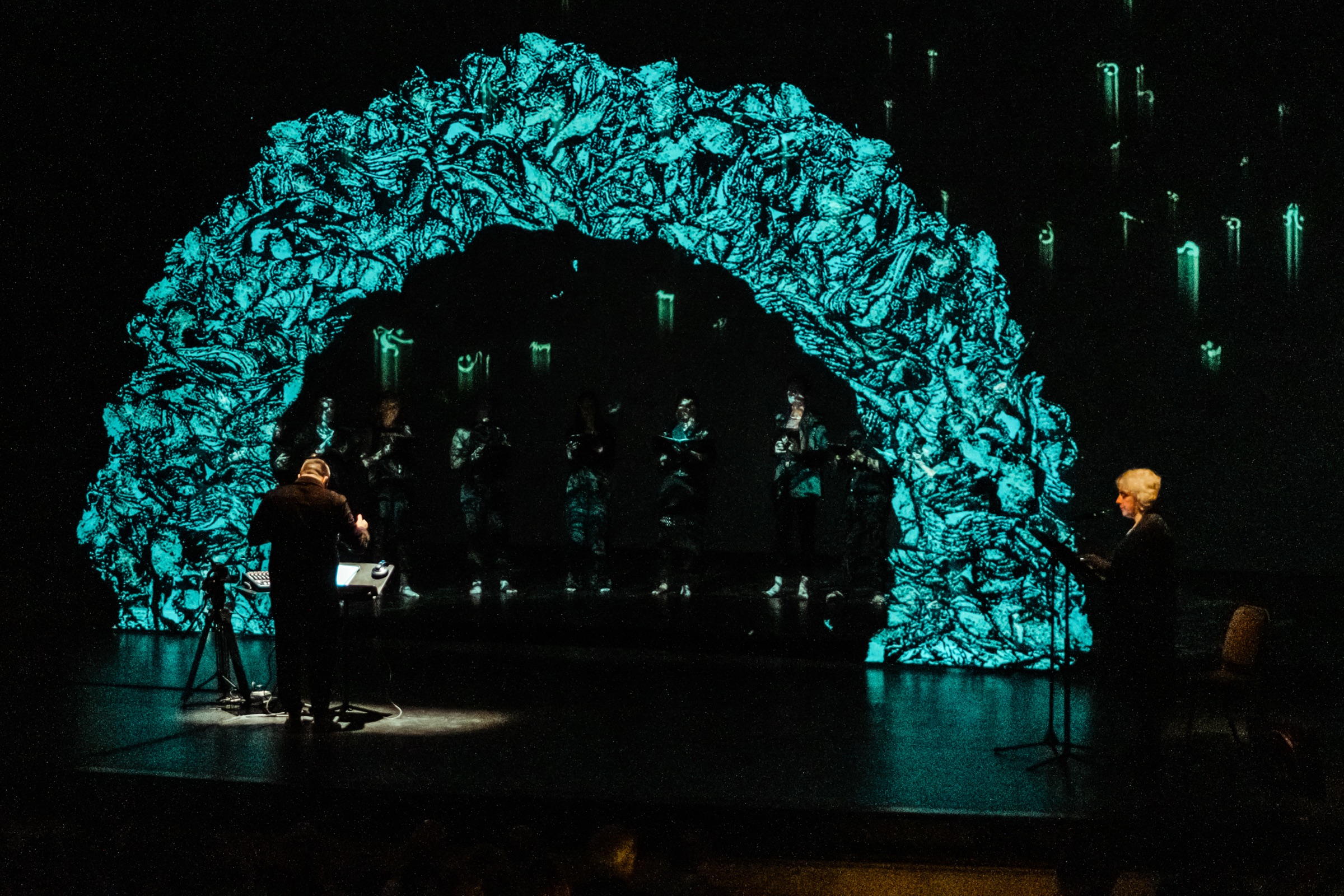
The production asks the room to move from observation into participation: to feel poetry as sound, sound as body, and image as a kind of spiritual weather.