Text as evidence.
The libretto draws from newspaper articles, diaries, and first-hand oral accounts, keeping the performance close to lived testimony.
A fully staged historical account of the 1930s environmental disaster, built with voice, bluegrass band, projection, choreographed movement, and raw documentary text.
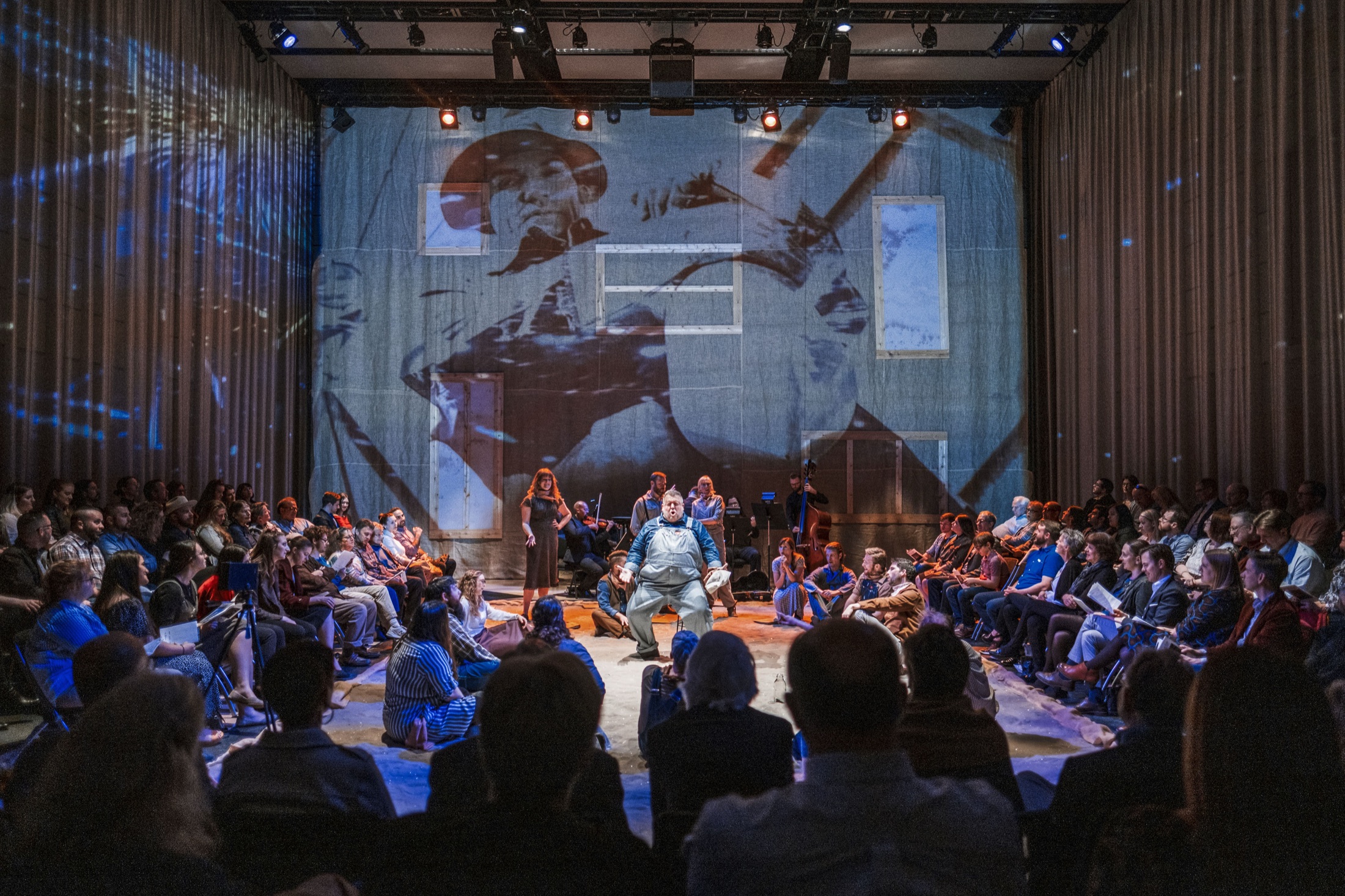
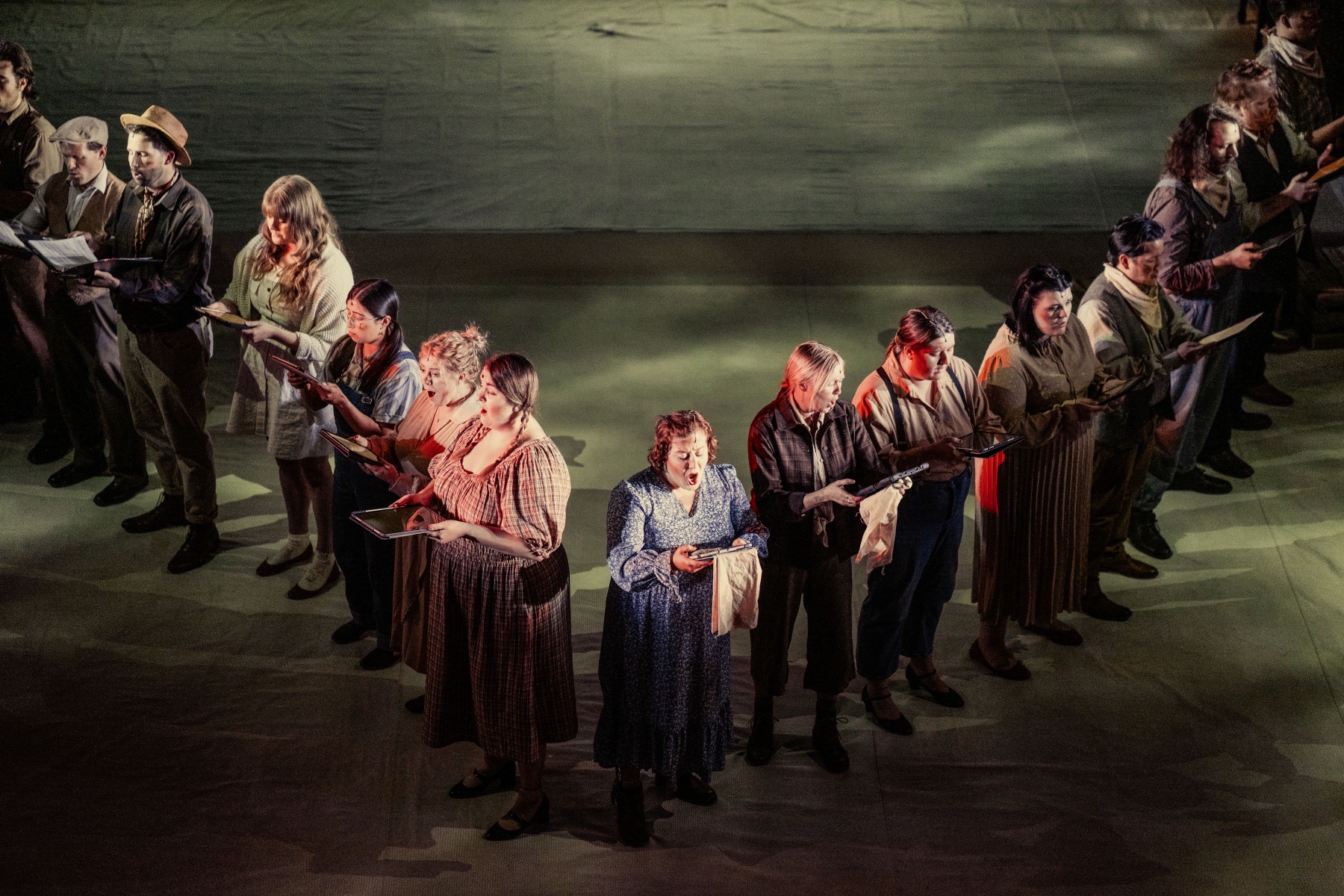
How can a historical disaster become a live, embodied account instead of an illustration? Dust Bowl turns archive into room-scale testimony: singers surrounded by audience, projection behaving like weather, and first-hand accounts pressing against the present tense.
The piece asks how a man-made environmental crisis was allowed to happen, whether we have learned from it, and what communal listening can do when history is staged as something still moving through the air.
The libretto draws from newspaper articles, diaries, and first-hand oral accounts, keeping the performance close to lived testimony.
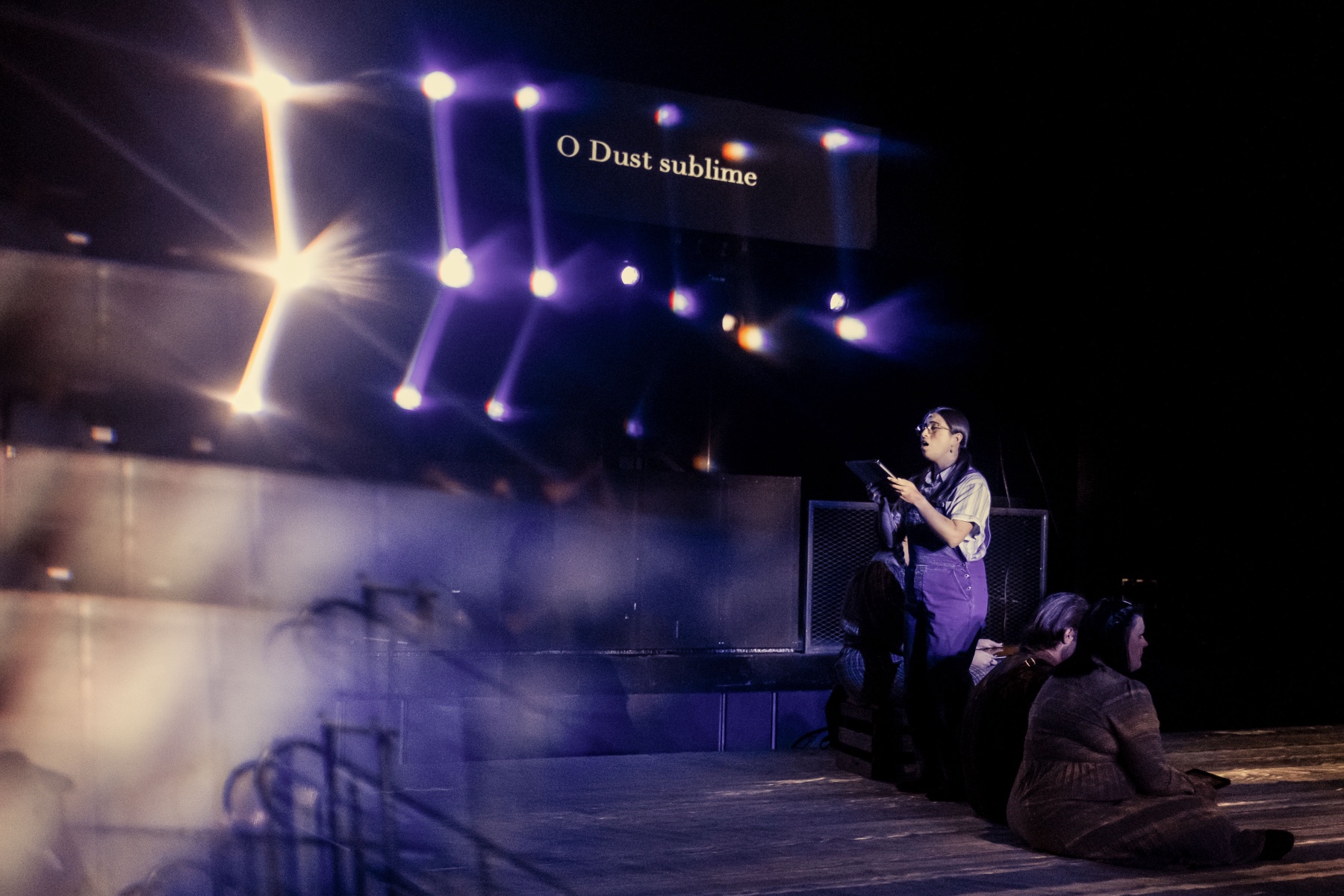
Projection turns the stage into a charged landscape, surrounding the singers with dust, memory, and historical pressure.
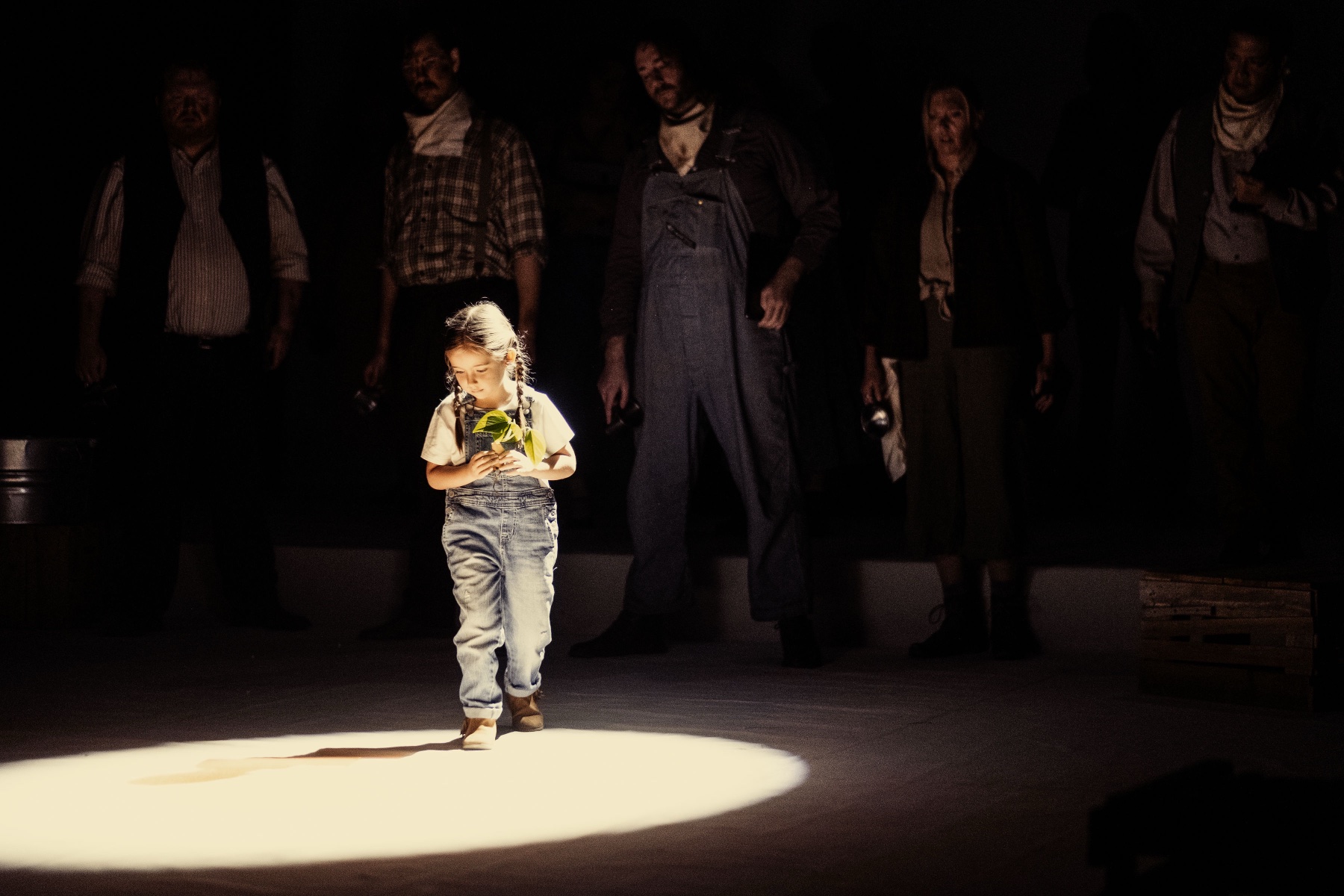
The staging turns the concert into a theatrical environment, with the audience close enough to feel implicated in the telling.
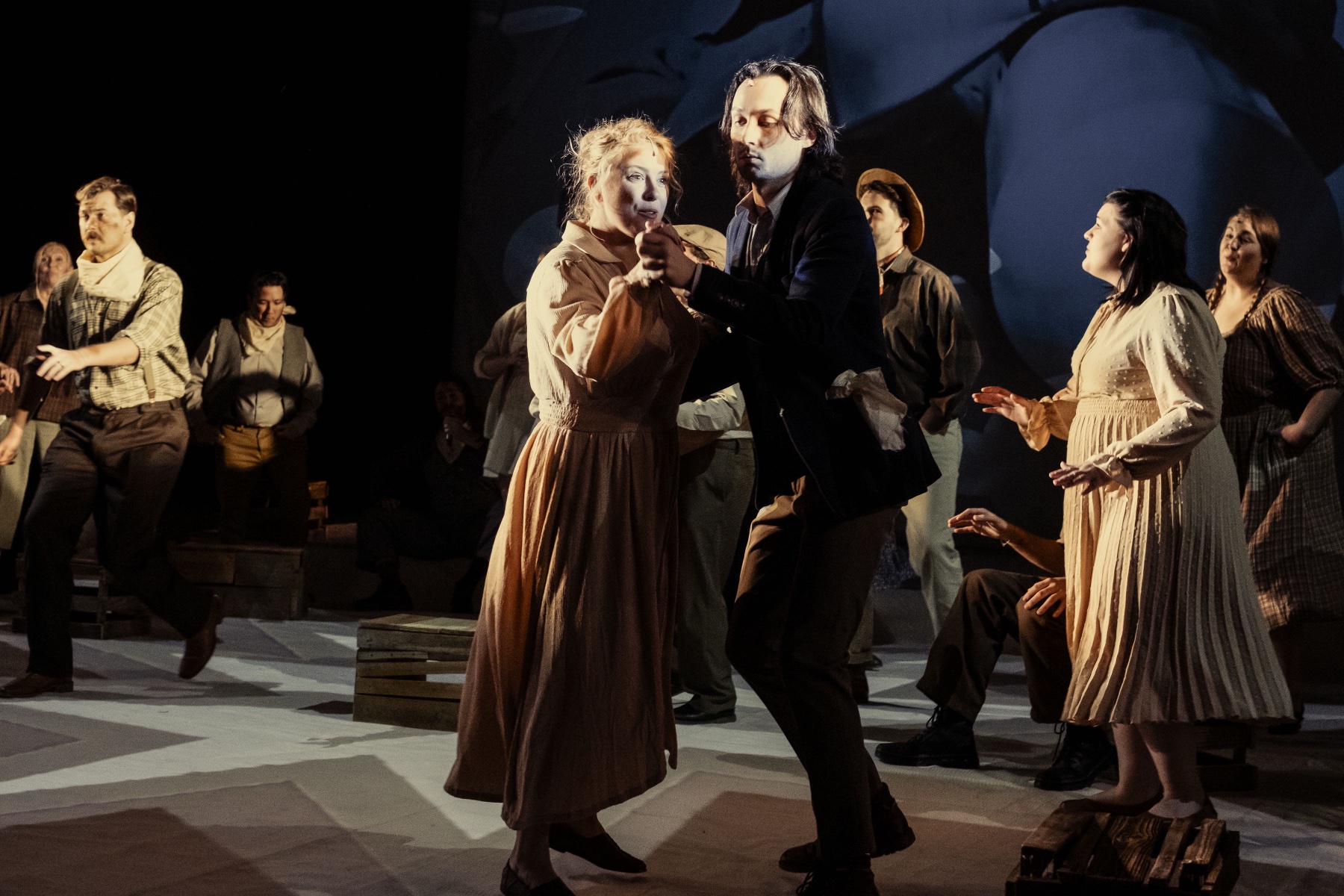
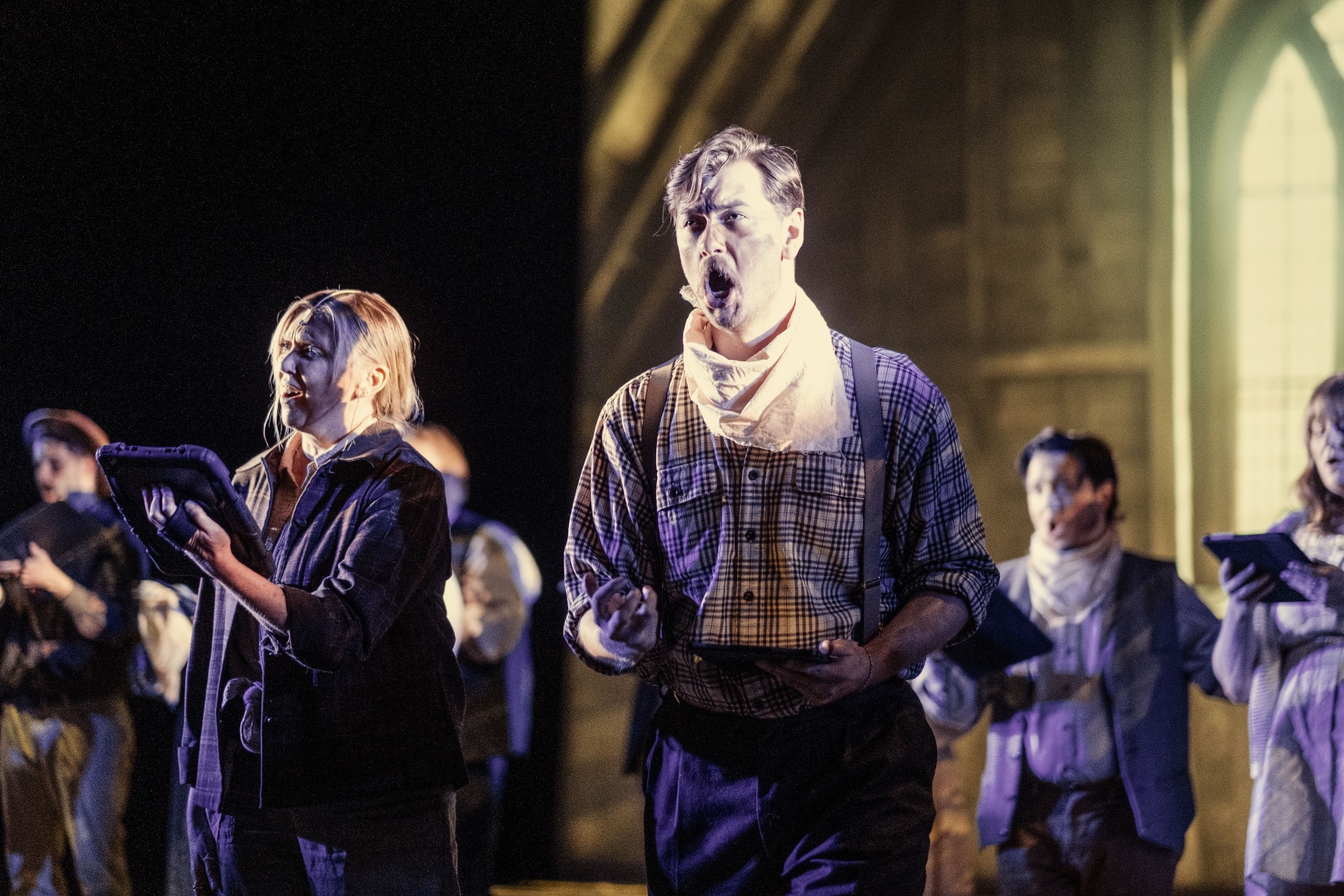
Two working excerpts from the staged production: Tex Thornton's testimony as a live scene, and the chorus moving through dust, projection, and ensemble pressure.
Dust Bowl combines Anthony J. Maglione's music with a bluegrass band, video projection, choreographed movement, English subtitles, and a documentary text world drawn from the people who lived through the crisis.